The LiT List
Glamping & Camping Ideas + Resources
Hot Tent Camping: The Complete Beginner's Guide to Camping With a Wood Stove
There's nothing quite like stepping out of the snow and into a canvas tent warmed by a crackling wood stove. That's hot tent camping, and it's one of the best ways to stretch your camping season into fall, winter and early spring. With a stove-ready canvas tent and a little know-how, you can camp warm and dry when most campsites are empty.
This guide covers everything you need for your first hot tent trip: planning, the gear to bring, choosing a stove, laying out your tent, setting up safely, running the fire, staying warm overnight, camping with kids and pets, and packing up. There's a detailed printable checklist at the end.
Key Takeaways
A hot tent is a canvas tent with a stove jack, so you can safely run a wood stove inside. You'll need the tent, a stove sized to it, chimney pipe with a spark arrestor, a stove mat, a CO alarm and dry firewood (under 20% moisture). Keep the stove at least 18" from the canvas, keep a vent open, and let the fire burn down before you sleep.
Jump to
- What is hot tenting?
- Plan your first trip
- The gear you need
- Choosing a stove
- Where to put the stove
- Step-by-step setup
- Lighting and running the stove
- Firewood tips
- Ventilation and CO safety
- Sleeping warm overnight
- Kids and pets
- Packing up
- Common mistakes
- Printable checklist
- FAQ
Related: Shop hot tents · Tent Stove Safety Tips · How to Choose a Tent Stove · Shop tent stoves & kits
What Is Hot Tenting?

Hot tenting means camping in a tent heated by a wood stove inside it. A hot tent is built for this: it has a stove jack, a heat-resistant opening in the roof or wall where the chimney pipe passes through, and it's usually made from heavy cotton canvas, often treated to be fire retardant. Smoke goes up and out the chimney, and the heat stays inside with you.
Why do people love it?
- Real warmth. A wood stove can turn a freezing night into shirt-sleeve comfort inside the tent.
- Dry heat. A wood stove vents its exhaust outside, so it dries the air instead of adding moisture. That means less condensation, and you can dry out wet gloves and socks.
- A longer season. Fall, winter and early spring camping become comfortable, and campsites are quieter.
- A camp kitchen. Most tent stoves have a flat top for boiling water, making coffee and cooking. Try a few of our tent stove recipes.
- The ambiance. The glow and crackle of a fire, without sitting out in the cold.
Can you hot tent in any tent? No. Never put a wood stove in a nylon or polyester tent, or in any tent without a proper stove jack. Synthetic fabrics melt and burn easily. Start with a tent designed for a stove, like our canvas hot tents.
Plan Your First Hot Tent Trip
A little planning makes your first night out much easier.
- Do a backyard test run. Pitch the tent, set up the stove and run a fire at home or close to home first. You'll learn how your stove behaves, how fast the tent warms up and roughly how much wood one evening uses, without being an hour from the car.
- Check fire rules before you go. Many parks and public lands have seasonal fire restrictions or burn bans, and some campgrounds have their own rules about wood stoves. Call ahead or check the land manager's website.
- Watch the forecast. Know the overnight low, wind and any snow in the forecast. Wind affects where you pitch and how your chimney drafts, and heavy snow means more time clearing the roof.
- Pick an easy first trip. Choose a drive-in site close to home, not a remote spot. Cold-weather camping takes more gear and more time, so give yourself room to learn.
- Tell someone your plan, including where you'll be and when you'll be back. Phone batteries drain faster in the cold, so bring a power bank.
The Hot Tent Gear You Need
The essentials:
- A stove-ready canvas tent with a built-in stove jack. Every tent in our hot tents collection has one.
- A wood stove sized to your tent (more on that below). We carry the Winnerwell Woodlander Double-View and Woodlander Large.
- Chimney pipe long enough to clear your roof, with a spark arrestor on top to keep embers off the canvas.
- A stove jack flashing kit to seal and protect the canvas around the pipe. See our Stove Jack Flashing Kit and how to install it.
- A triple wall pipe section where the pipe passes through the canvas. It stays cooler on the outside. We like the Winnerwell 3.5" triple wall pipe.
- A fireproof stove mat or board under the stove to protect your tent floor.
- A battery-powered carbon monoxide (CO) alarm. Non-negotiable.
- A fire extinguisher, like the compact Element E50.
- Dry firewood, kindling and a fire starter.
Nice to have:
- Heat-resistant gloves, a fire poker and a small ash shovel and bucket
- A stove thermometer, so you can see how hot the stove is running
- A small battery fan to spread warm air around the tent
- A footprint and rugs to insulate the floor
- A canvas log carrier for bringing wood inside
Choosing the Right Stove for Your Hot Tent
Match the stove to your tent and how cold it will get:
- Tent size. A small tent heats quickly, and an oversized stove can make it uncomfortably hot. A larger tent, like a 16' (5M) or 19' (6M) bell tent or a wall tent, needs a bigger firebox to keep up.
- Burn time. A larger firebox holds more wood, so you reload less often.
- Weight and packability. If you car camp, a heavier steel stove is fine. If you carry gear farther, weight matters more.
- Pipe diameter. Make sure your stove pipe fits your stove jack or flashing kit. Our flashing kit fits pipe from 2.5" to 6.25".
- A glass window lets you see the fire and enjoy the glow.
Read our full guide on how to choose the right tent stove and our roundup of the best bell tent stoves, or contact us and we'll help you choose.
Where to Put the Stove (and Everything Else)
In a bell tent, the stove goes beneath the stove jack, so the jack position sets your layout. Plan the rest of the tent around it:
- Face the door away from the wind. It keeps cold air and blowing snow out, and makes it easier to step in and out with firewood.
- Create a stove zone. Keep the area around the stove clear: the stove mat, a small stack of the next few pieces of wood and your fire tools. Nothing else.
- Sleep away from the stove. Put beds and cots on the opposite side of the tent, so no one rolls toward the stove or drapes a blanket near it.
- Leave a clear walkway from the door to the stove, so you're not stepping over gear with an armful of wood.
- Keep the main firewood supply outside under a tarp or in a bin, and bring in only what you need for the next hour or two.
- Hang a drying line for gloves and socks, but well away from the stove and pipe.
Step-by-Step: Setting Up Your Hot Tent

- Do a first burn at home. Many new stoves need an initial burn outdoors to cure the paint and burn off manufacturing oils. Check your stove's manual and do this before your trip, not inside your tent.
- Choose your site. Look for level ground away from overhanging branches. In wind, think about where the smoke will blow.
- Pitch the tent tight. Stake it properly and tension every guy line. A tight tent is safer around a stove and stronger in wind and snow.
- Place the stove mat and stove under the stove jack. Make sure the stove sits level and stable.
- Check clearances. Keep the stove at least 18 inches from the canvas walls, and follow your stove maker's clearances. Keep bedding, gear and rugs well back.
- Install the chimney. Fit the triple wall section where the pipe passes through the stove jack, connect it to the stove, then add pipe sections from outside. Make sure the pipe rises at least 15 inches above the canvas (or more if your stove maker recommends it).
- Add the spark arrestor on top of the pipe.
- Support a tall chimney. In wind, guy out the pipe so it can't tip or pull on the canvas.
- Set up your CO alarm and keep the fire extinguisher where you can grab it.
Lighting and Running the Stove
- Start small. Open the damper and air controls, and light a small fire with kindling and a fire starter. Add larger pieces once it's burning well.
- Feed it a little at a time. Several small loads are easier to control than one big one. A stove packed full can overheat the pipe and the tent.
- Use the air controls. Open them to build heat, then close them partway to slow the burn. If the tent gets too warm, reduce the air and open a window instead of letting the fire roar.
- Watch the stovepipe. A glowing red pipe means the fire is too hot. Close down the air and let it settle.
- Open the door slowly when you add wood, so smoke doesn't puff into the tent.
Firewood Tips for Hot Tenting

Good wood makes a huge difference. Wet wood smokes, makes little heat and builds up creosote in your pipe.
- Burn dry, seasoned wood. The EPA says wood burns best at a moisture content of less than 20 percent. Seasoned wood is darker, lighter in weight and sounds hollow when you knock two pieces together. A cheap moisture meter takes the guesswork out.
- Bring plenty of kindling, and keep it dry in a bag or bin.
- Cut wood to fit your firebox before your trip, so you're not splitting logs in the dark.
- Buy firewood where you'll burn it. Moving firewood can spread invasive pests, and many parks restrict it.
- Never burn trash, painted or treated wood in your tent stove.
- Bring more than you think you need. A cold night can burn through a surprising amount of wood.
Ventilation, Carbon Monoxide and Condensation
Even with a properly vented stove, always keep some fresh air moving. Crack a window or roof vent, even when it's cold. Keep a battery CO alarm in the tent whenever the stove is lit, and if anyone gets a headache, feels dizzy or nauseated, get everyone outside into fresh air.
A bit of airflow also cuts condensation. Wood stoves produce dry heat, but breath, cooking, wet gear and snow brought in on boots all add moisture. Avoid drying wet gear right against the canvas walls. More tips: how to prevent tent condensation.
Thinking about a propane heater instead? They can work for short warm-ups, but only indoor-rated models, with ventilation, and never while you sleep. Read can you use a propane heater in a tent?
Sleeping Warm Overnight
A wood stove keeps you toasty in the evening, but plan to sleep warm without it. We recommend letting the fire burn down before you go to sleep instead of loading it up for the night.
- Bring a sleeping bag rated for the overnight low. The stove warms the evening; your bag gets you through the night.
- Get off the cold ground. Most heat loss is through the floor. Use cots or insulated pads, plus a footprint and rugs.
- Prep for the morning. Leave kindling, a fire starter and a few dry logs by the stove so you can relight quickly.
- Change into dry clothes for sleeping. Damp base layers from the day will make you cold overnight.
- Use a hot water bottle. Fill a sturdy water bottle with hot water from the stove kettle, close it tightly and tuck it into your sleeping bag.
- Eat and drink something warm before bed. Your body makes heat digesting food.
- Wear a hat and keep a dry pair of socks just for sleeping.
- Bring a heated blanket or mattress pad. Once the stove burns down, a heated pad on your cot keeps you warm with no moisture or carbon monoxide. Power it with a portable power station like the Jackery Explorer 1000 v2. See heated blankets and portable power for run times and tips.
- Keep the CO alarm on all night, and keep a vent open.
More ideas: 10 tips for staying warm while winter camping.
Camping in snow? Snow piling up on the roof adds a lot of weight to the center pole, especially on larger tents. Clear it early and often, keep the canvas tight and never leave the tent unattended in a snowstorm. Read using a bell tent in the snow and see our 4 season tents.
Hot Tenting With Kids and Pets
Hot tenting is a great family adventure. A few rules keep everyone safe:
- Set a "stove zone" rule. No running, playing or roughhousing near the stove, and only adults load the fire.
- Remember that the stove and pipe stay hot long after the flames die down. Make sure kids know not to touch either one.
- Keep pets' beds and water bowls away from the stove, and watch tails and curious noses.
- Keep the stove door closed except when an adult is adding wood.
- Put younger kids to bed on the far side of the tent from the stove.
Packing Up After a Hot Tent Trip
- Let the stove cool completely before you touch the pipe or pack anything. This can take a while.
- Dispose of ashes safely. Ashes can hold hot coals for hours. Put them in a metal container and make sure they're cold before you dump them.
- Clean the pipe regularly to remove soot and creosote. See our tent stove maintenance tips.
- Close the stove jack cover to keep rain out.
- Dry your tent before storing it. Winter trips often mean packing up damp canvas. Set it up again at home to dry completely, or mold and mildew can set in.
Common Hot Tenting Mistakes to Avoid
- Using a tent without a proper stove jack, or a synthetic tent
- Skipping the spark arrestor
- Putting the stove too close to the canvas, bedding or gear
- Burning wet or green wood
- Overloading the stove until the pipe glows red
- Sealing the tent up tight with no ventilation
- Camping without a CO alarm or fire extinguisher
- Loading the stove full and going to sleep
- Letting snow pile up on the roof
- Packing the tent away wet
Printable Hot Tent Camping Checklist
Use this list to pack, and download the printable PDF checklist to check things off as you go.
Shelter & Campsite
- ☐ Canvas hot tent with stove jack — check the stove jack cover and seams before you go
- ☐ Poles — and a spare pole set if you have one
- ☐ Stakes, plus extras — snow or sand stakes for soft ground; heavy-duty stakes for frozen ground
- ☐ Guy lines — plus spare cord
- ☐ Mallet and stake puller
- ☐ Footprint or groundsheet
- ☐ Rugs or foam floor tiles — most heat is lost through the floor
- ☐ Door mat or boot tray — keeps snow and mud out
- ☐ Soft broom or snow brush — for clearing snow off the roof
- ☐ Small shovel — to clear the site and pull snow away from the walls
Stove & Chimney
- ☐ Wood stove — burned in at home first
- ☐ All chimney pipe sections — count them before you leave
- ☐ Triple wall pipe section — where the pipe passes through the stove jack
- ☐ Spark arrestor
- ☐ Stove jack flashing kit
- ☐ Pipe guy wire or clips — to steady a tall chimney in wind
- ☐ Fireproof stove mat or board
- ☐ Stove thermometer — optional, but helpful
Fire & Firewood
- ☐ Dry, seasoned firewood — under 20% moisture, cut to fit your firebox
- ☐ A bin or tarp to keep wood dry
- ☐ Kindling — more than you think
- ☐ Two kinds of fire starter — e.g. fire starter cubes and a lighter
- ☐ Waterproof matches as backup
- ☐ Moisture meter — optional
- ☐ Log carrier
- ☐ Heat-resistant gloves
- ☐ Fire poker
- ☐ Ash shovel and metal ash bucket with a lid
Safety
- ☐ Battery CO alarm — test it and pack spare batteries
- ☐ Fire extinguisher — check the gauge
- ☐ First aid kit — including burn gel
- ☐ Headlamps and a battery lantern — no fuel-burning lanterns inside
- ☐ Phone and power bank — cold drains batteries fast
- ☐ Weather forecast and fire restrictions — checked before you leave
Sleep
- ☐ Sleeping bags rated for the overnight low
- ☐ Cots or insulated sleeping pads
- ☐ Extra blanket
- ☐ Pillows
- ☐ Hot water bottle — a sturdy, leak-proof bottle
- ☐ Dry clothes just for sleeping
Clothing
- ☐ Base layers — wool or synthetic, not cotton
- ☐ Insulating mid layer — fleece or down
- ☐ Waterproof jacket and pants
- ☐ Warm hat and gloves — plus a spare pair of gloves
- ☐ Wool socks — plus a dry pair for sleeping
- ☐ Insulated boots
- ☐ Camp slippers or booties — for inside the tent
Kitchen
- ☐ Kettle
- ☐ Cast iron pan or Dutch oven — for cooking on the stove top
- ☐ Pot holder or heat gloves
- ☐ Trivet — for hot pots
- ☐ Insulated water jug — water bottles can freeze overnight
- ☐ Food and hot drinks
- ☐ Mugs, plates and utensils
- ☐ Trash bags
Comfort
- ☐ Camp chairs and a small table
- ☐ Small battery fan — helps spread warm air
- ☐ Drying line — hung well away from the stove
- ☐ Battery string lights
- ☐ Books, cards or games
Before You Leave Home
- ☐ Burn in a new stove outdoors (check your stove's manual)
- ☐ Test your CO alarm
- ☐ Check the forecast: overnight low, wind and snow
- ☐ Check fire restrictions and campground stove rules
- ☐ Charge phones, headlamps and power banks
- ☐ Tell someone where you're going and when you'll be back
At Camp: Before You Light the Stove
- ☐ Tent pitched tight, every guy line tensioned
- ☐ Stove level on its mat, under the stove jack
- ☐ At least 18" between the stove and the canvas
- ☐ Pipe at least 15" above the canvas, with the spark arrestor on
- ☐ Vent or window open
- ☐ CO alarm on, and extinguisher by the door
- ☐ Firewood stacked dry outside, a small supply inside
Before Bed
- ☐ Let the fire burn down
- ☐ Vent open and CO alarm on
- ☐ Bedding and gear clear of the stove
- ☐ Kindling and a fire starter ready for the morning
- ☐ Snow cleared off the roof if it's snowing
Packing Up
- ☐ Stove and pipe completely cool
- ☐ Ashes cold, in a metal container
- ☐ Pipe cleaned and packed
- ☐ Stove jack cover closed
- ☐ Tent dried completely at home before storing
Hot Tent Camping FAQ
Is hot tent camping safe?
Yes, when you use a tent designed for a stove and follow basic safety: a stove jack and spark arrestor, proper clearances, a stove mat, ventilation, a CO alarm and a fire extinguisher. Most problems come from skipping one of these.
Can I put a wood stove in any tent?
No. Use a tent built for a stove, with a stove jack and heavy canvas. Never use a wood stove in a nylon or polyester tent.
How warm does a hot tent get?
Warm enough to sit inside in a T-shirt on many cold nights, depending on the outside temperature, wind, tent size, stove size and how well your floor is insulated. Smaller tents heat faster.
Can I leave the stove burning overnight?
We recommend letting the fire burn down before you go to sleep. If a small fire is still going after bedtime, keep a vent open and your CO alarm on, and never leave a hot stove when no one is in the tent.
Can I cook on a tent stove?
Yes. Most tent stoves have a flat top for boiling water and cooking. It's one of the best parts of hot tenting.
Can I use a fly cover with a wood stove?
A fly cover can make a roof stove jack harder to use, since the pipe has to pass through it. Check whether your fly is designed for a stove pipe before using both together.
Is a wood stove better than a propane heater?
For long, cold nights, usually yes. A wood stove vents its exhaust outside and gives dry heat, while a propane heater burns inside the tent and adds moisture. See our propane heater safety guide.
What's the best size hot tent?
For couples and small families, a 13' (4M) tent heats quickly. A 16' (5M) is our most popular size, with room for beds, a stove and gear. A 19' (6M) or a wall tent works well for larger groups and basecamps. Compare them in our hot tents collection.
READY TO TRY HOT TENTING?



Related Resources
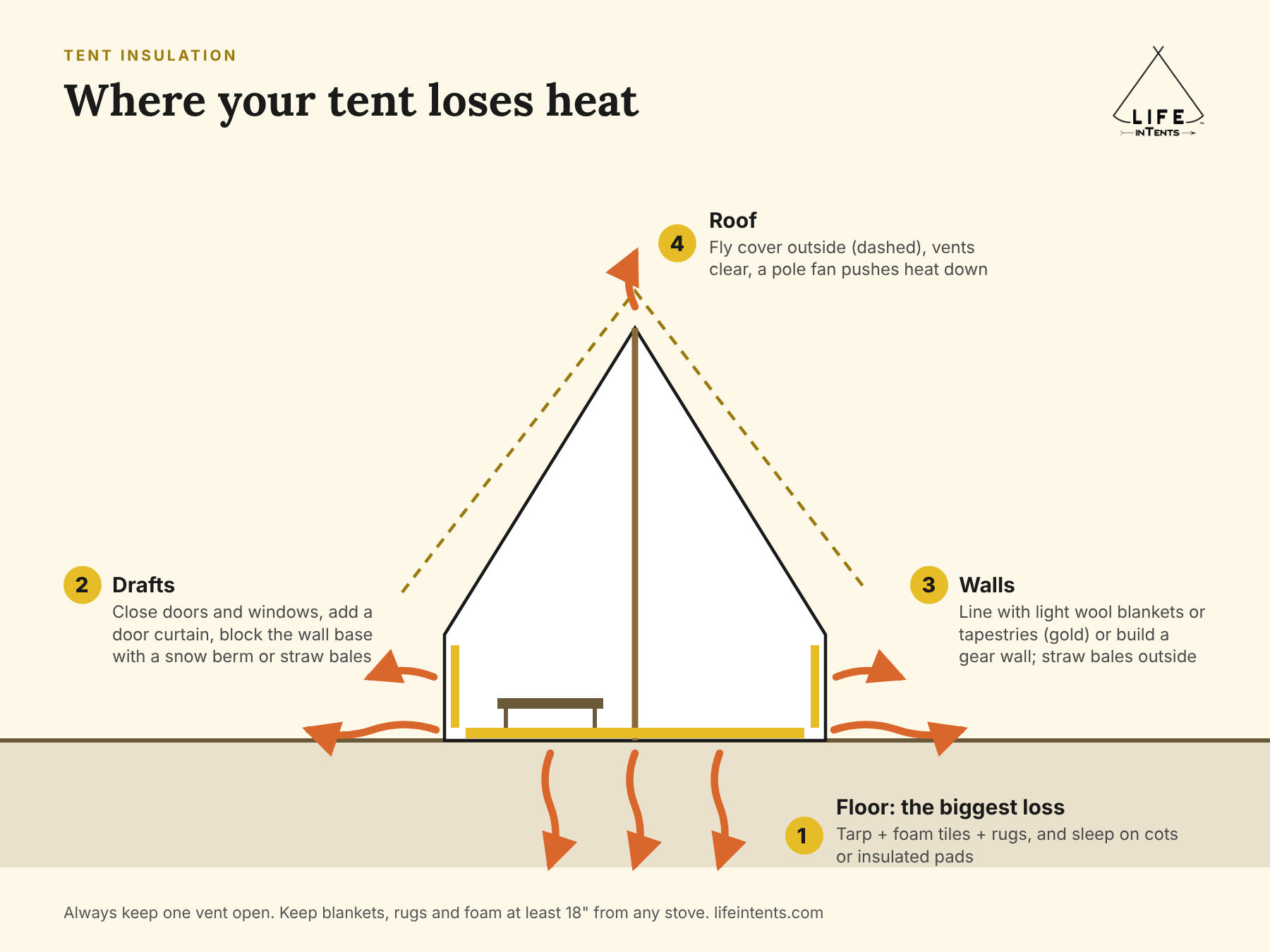
How to Insulate a Canvas Tent: Find Where Heat Escapes and Stop It
A canvas tent is a single layer of fabric between you and the weather. That's part of its charm: itA canvas tent loses heat through the floor, drafts, walls and roof. Here’s how to find each leak and fix it, with practical upgrades, a few creative tricks and the mistakes to avoid.
Camping Gift Ideas for People Who Have Everything
Camping is a great way to get outside and enjoy nature. But what do you do if the camper you are buyWe've assembled these camping gift ideas to help shop for a loved one. Browse unique camping gifts such as blankets, flasks, camp bags, lanterns, books, cots and more.